
Floral Styling for Interior Design
How Flowers Support a Space Without Stealing the Show
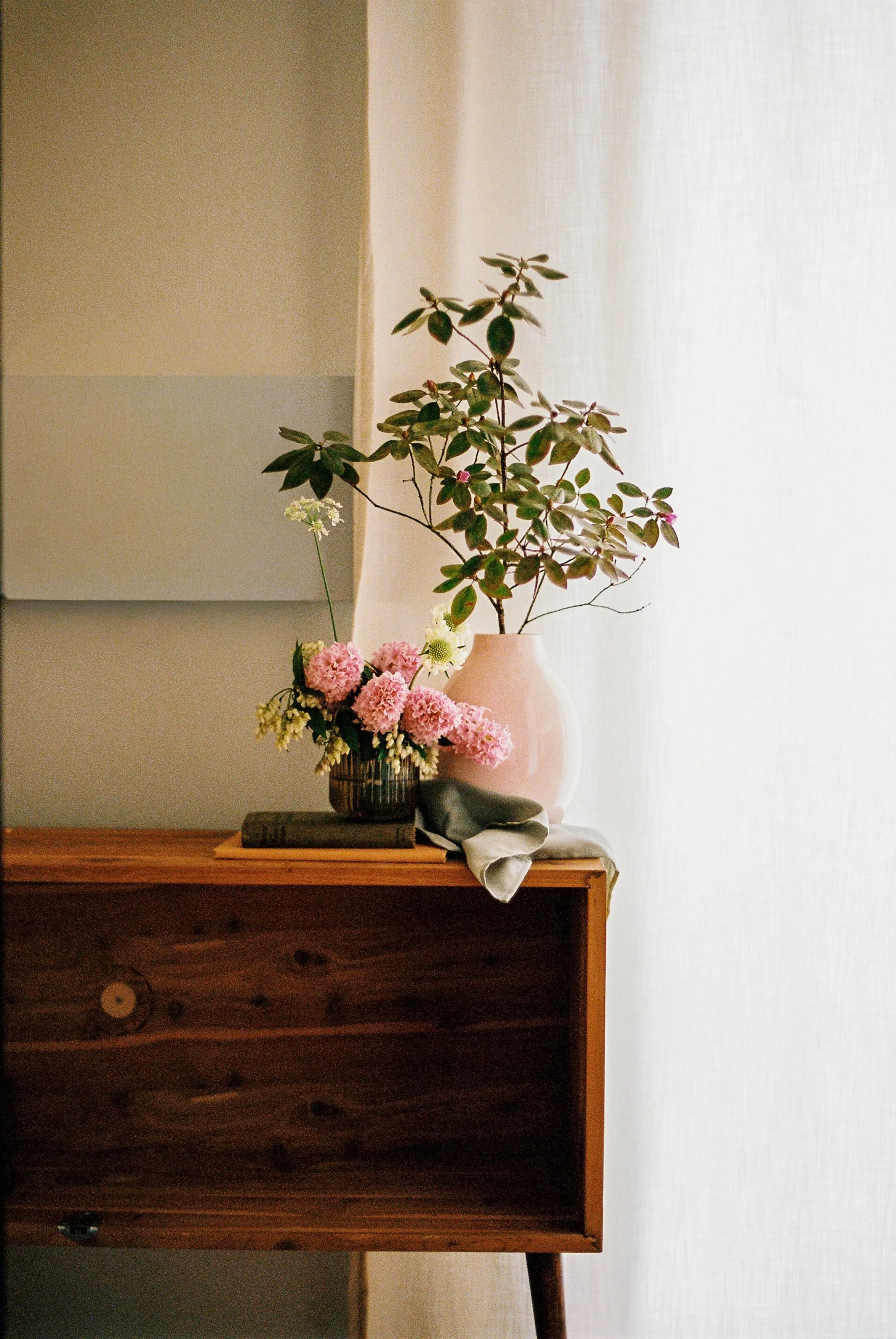
Interior Floral Design, Photo by Katie Armbrecht
There's a version of florals that dominates a room; the oversized arrangement that demands your attention the moment you walk in, or the centerpiece that competes with every other design decision in the space. But that’s not really what I'm interested in.
What I'm interested in is the flower you almost didn't notice, and then couldn't stop thinking about.
Interior designers spend enormous energy making sure every element of a space is working in service of the whole. Furniture, light, texture, scale - everything considered, nothing accidental. And then florals get treated as an afterthought. A last-minute addition. Something pretty to fill a corner.
I think that's such a missed opportunity. Because flowers, when they're chosen and placed with real intention, aren't just there to decorate a space. They're there to finish it in a way nothing else quite can.
It's not about doing less for the sake of it. It's more about trusting that the right thing, placed well, is genuinely enough
Flowers Are a Design Element, Not a Decoration
The distinction matters more than it might seem. Decoration sits on top of a space. A design element works within it, responding to what's already there, filling a gap you couldn't quite name, adding a layer that no material can replicate.
Flowers bring movement and scent and something living into an environment that is otherwise entirely static. That quality, the aliveness of them, is actually the foundation of biophilic design, which is something we’ll continue to talk about in this space. The short version is that humans are wired to respond to living things in their environment. It's not just aesthetic preference. It goes much deeper than that.
So when you place flowers thoughtfully in a designed space, you're not just making it prettier. You're genuinely changing how people feel inside it. And that's a whole different thing.
Supporting The Space Means Understanding The Space
The most common mistake I see when designers incorporate florals into a shoot or a staging is choosing flowers they love rather than flowers the space actually needs. And those are often two very different things.
A room with warm, saturated tones and heavy textures probably doesn't need a lush, colorful arrangement competing for attention. It might need a single architectural stem in a simple vessel, something that introduces a little contrast without adding chaos. A light, airy space with minimal furniture might be able to hold more, like a loose organic arrangement that echoes the softness of the room without overwhelming it.
The question I always come back to is not "what's beautiful?" but "what does this room need that it doesn't already have?" Sometimes that's texture, sometimes it's height, sometimes it's just a small moment of softness in an otherwise structured space. Flowers are really good at providing all of those things, as long as you're listening to the room first.
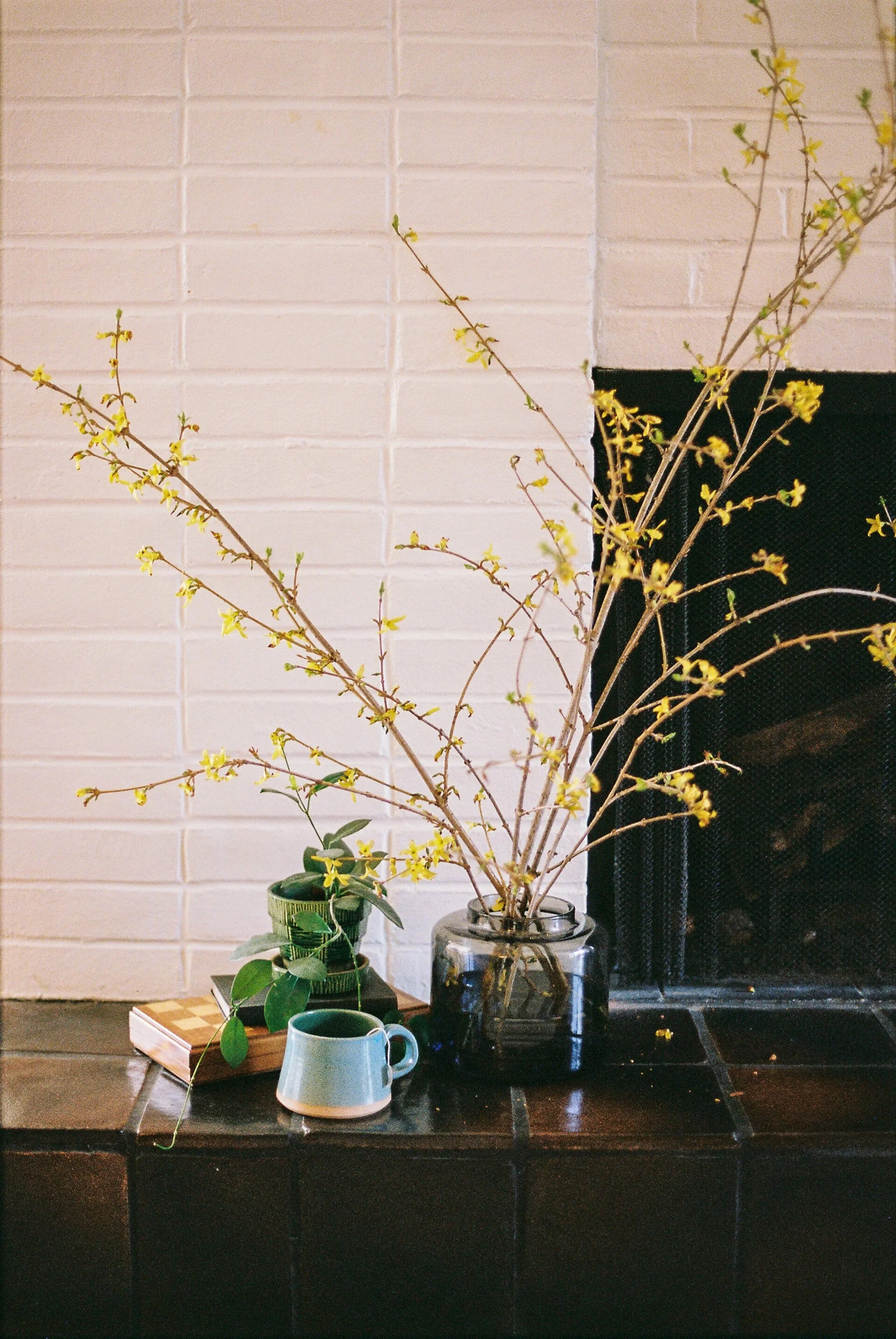
Interior floral styling, photo by Katie Armbrecht
Scale, Placement, and The Art of Restraint
Designers think about scale constantly. Is the rug too small for a seating area? Is the light fixture too low for the ceiling? You know when something is off even before you can identify why. The same instincts apply to florals, and I think they apply more than most people realize.
A small arrangement in a large room just disappears. An oversized one in a tight space can feel suffocating. But scale isn't only about the size of the arrangement itself. It's really about the relationship between the arrangement, the vessel, and everything around it.
Placement is equally important and probably less considered. Where a flower arrangement sits actually changes how you move through a room. Something low on a coffee table draws the eye down and inward and creates a feeling of intimacy. Something tall and vertical in an entryway pulls the eye up and through, which gives a space that sense of arrival you feel in a well designed hotel lobby. These aren't decorating tricks so much as spatial decisions, and they deserve the same thoughtfulness as any other choice you're making in a room.
And then there's restraint, which I think is honestly the hardest skill in floral design and probably the most undervalued. A single stem in the right vessel in the right spot can do more work than an arrangement twice its size that hasn't been thought through. It's not about doing less for the sake of it. It's more about trusting that the right thing, placed well, is genuinely enough.
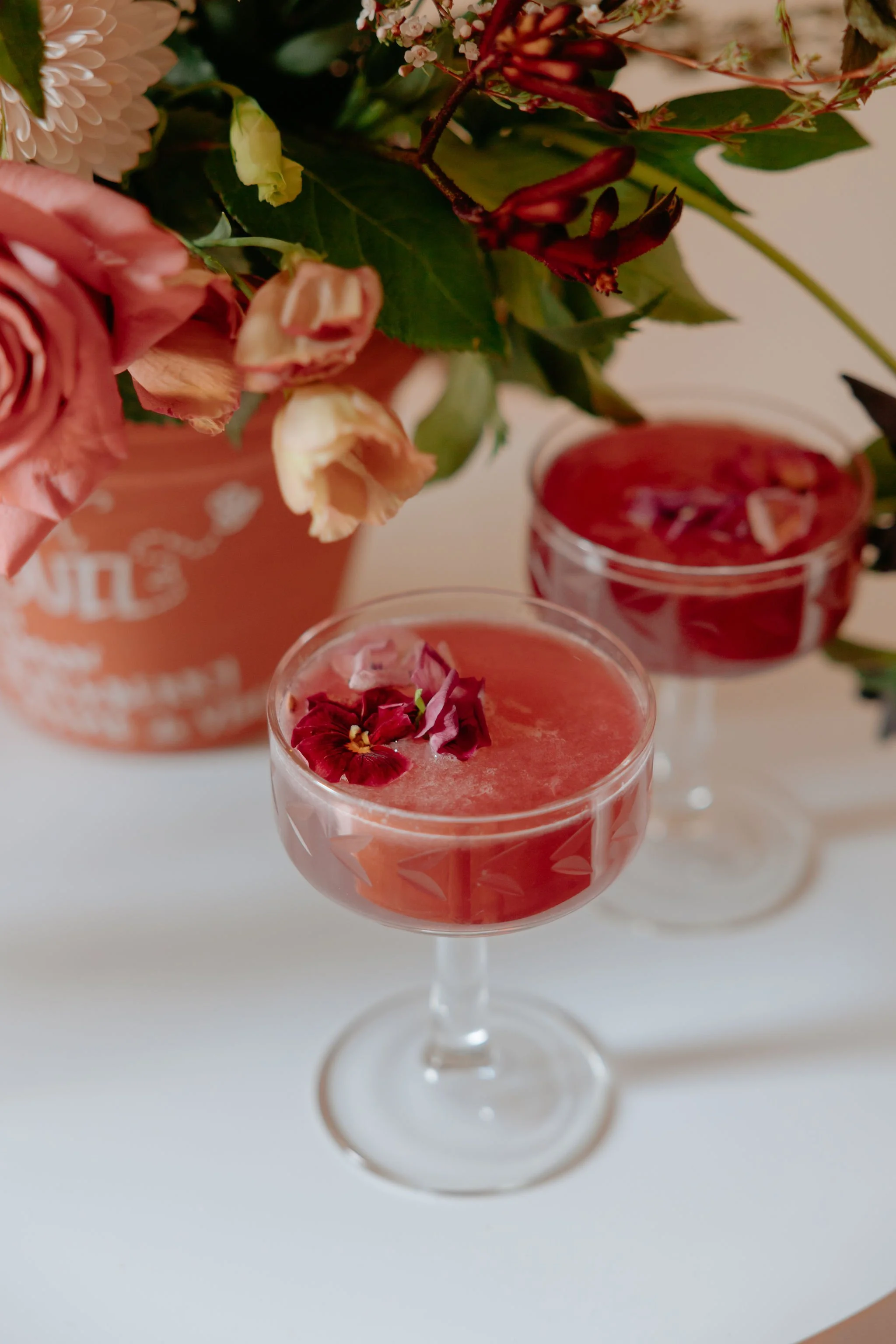
Floral styling for a photoshoot, photo by Liz Capuano
For The Photoshoot Specifically
Staging florals for photography has its own set of considerations that go a little beyond general design principles. What looks beautiful in person doesn't always translate on camera, and sometimes the opposite is true too.
White and very pale flowers tend to blow out in bright light, losing definition and reading as flat on camera. Deeply saturated colors can dominate a frame in ways they wouldn't in person. Loose, airy arrangements with a little movement and negative space often photograph better than dense compact ones, because the camera can actually read the individual elements rather than just seeing one big mass of color.
Texture also matters a lot in photography, maybe more than people expect. Ranunculus, garden roses, and anemones tend to photograph beautifully because of how complex their petals are. And something like a carnation, which honestly gets unfairly dismissed, can add incredible texture to a frame at a fraction of the cost of fancier options. Worth reconsidering if you've been writing them off.
Practical considerations matter too. Shoot days are long, and whatever you're working with needs to hold up under heat, light, and time. Conditioning your stems properly the night before, keeping them in water as long as possible before you start styling, and knowing which flowers tend to wilt quickly under studio conditions will save you a lot of stress.
A Note on Budget
Good floral styling for a photoshoot doesn't require an extravagant budget, it requires good editing. A few well chosen stems from a local market, some foraged greenery, even grocery store flowers treated with care - these can serve a beautifully designed space just as well as anything more expensive. It really comes down to knowing what the space needs and choosing accordingly.
And really, that's true beyond the photoshoot. Flowers have a place in almost any space and almost any budget when you approach them with intention rather than impulse. That's really what all of this comes back to for me - not abundance, not perfection, just the right thing in the right place, chosen for the right reasons. Flowers don't need to take the spotlight to change a room. They just need to be chosen thoughtfully and placed with care.