
What is a Floral Strategist?
The Role of a Floral Strategist
At its heart, floral strategy exists to care for people quietly and well.
A floral strategist holds the long view. They take on the floral vision so a space can function with intention, allowing hosts, brands, and teams to show up fully, without having to manage the details of how nature lives inside their environment.
This work is subtle by design. When done well, it doesn’t announce itself. It simply makes a place feel easier to be in.
Floral strategy asks us to look more closely at how spaces care for people, often without saying a word.
Floral strategy is not about decoration, or placing flowers in a room ‘because you should’. It’s about injecting an extra dose of beauty into a public space in a language that everyone can understand. Flowers are first impressions, and guests want to be swept off their feet.
Rather than approaching florals as decoration alone, floral strategy considers the existing heartbeat of a room and determines how the addition of living elements can enhance the movement, functionality, and overall experience of the space over time.
This work is less about arranging flowers for a single moment and more about designing floral systems that belong to a place. A floral strategist listens first; to the space, the people who move through it, and the purpose it serves, then responds with florals that feel intentional, grounded, and quietly supportive.
In hospitality spaces, brand environments, and interiors where people gather and return, floral strategy becomes part of the architecture of care. It’s not about adding in extra ‘things’ to ensure a good guest experience . It’s about presence and grounding for the guests, and the spaces themselves.
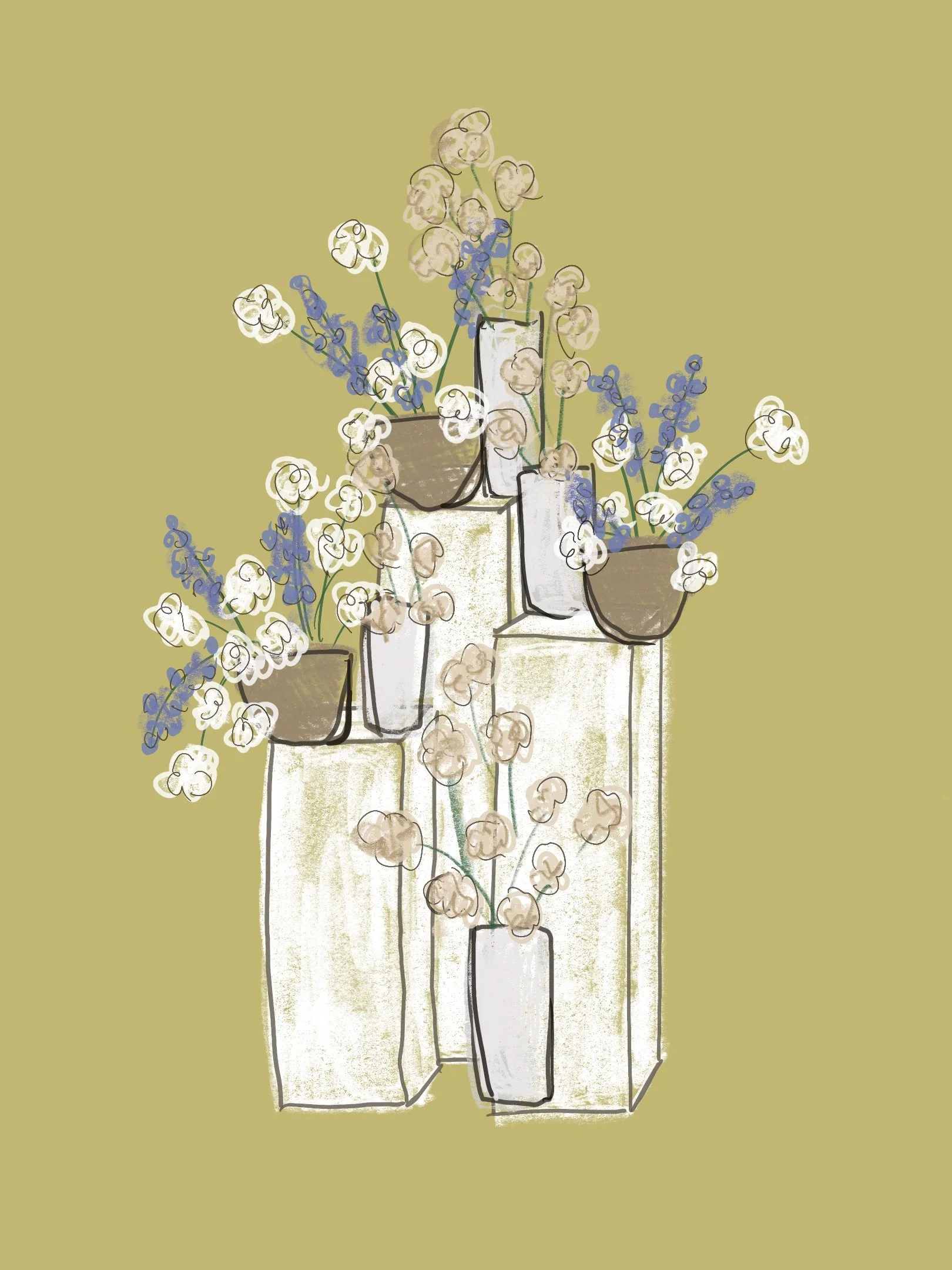
Sketch of a custom biophilic floral design for a hospitality interior
The Floral Strategy Process
Floral strategy begins with observation. Before a single stem is selected, the process focuses on understanding how a space functions, where attention naturally flows, and how people are meant to feel as they move through it.
This includes studying light, materials, scale, and circulation, as well as listening closely to a brand’s values or a host’s intentions. From there, floral decisions are made with restraint and purpose, prioritizing seasonality, native or regionally appropriate flowers, and compositions that integrate rather than compete with their surroundings.
The result is a floral approach that unfolds over time. Designs evolve with the seasons, respond to use, and become familiar without becoming invisible. Instead of asking florals to perform loudly, the process allows them to guide gently, softening edges, slowing movement, and offering moments of calm where they’re most needed.
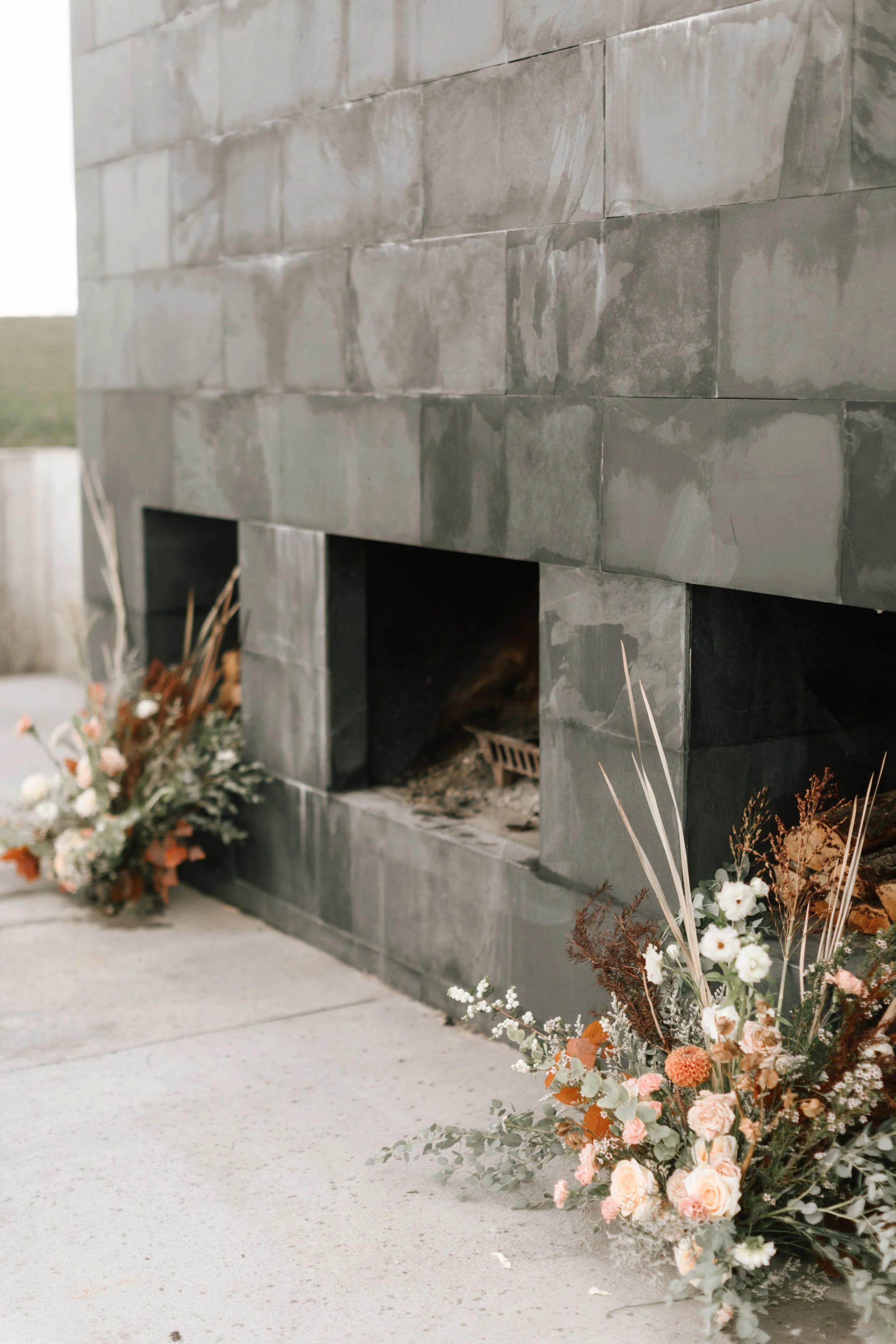
Biophilic floral design in front of a stone fireplace
Floral Strategy and Biophilic Design
Floral strategy is deeply informed by biophilic design - the understanding that humans are wired to feel better in the presence of natural, living systems. Flowers and plant material reconnect interiors to the rhythms of the outside world, offering sensory cues that feel instinctive rather than ornamental.
Unlike static décor, florals carry time with them. They reflect season, climate, and change. When chosen thoughtfully, they ground a space in its surroundings, reinforcing a sense of place rather than imposing a trend. This approach favors materials that feel native, tactile, and alive, allowing nature to re-enter environments where it’s often been edited out.
Biophilic inspiration isn’t about abundance. It’s about clarity. Floral elements can reduce visual noise, introduce softness, and create moments of order within busy interiors. They quietly remind us that we are part of something living, cyclical, and responsive.
This is especially important in hospitality, workplaces, and shared interiors; places where people return again and again, often without consciously registering what draws them back.
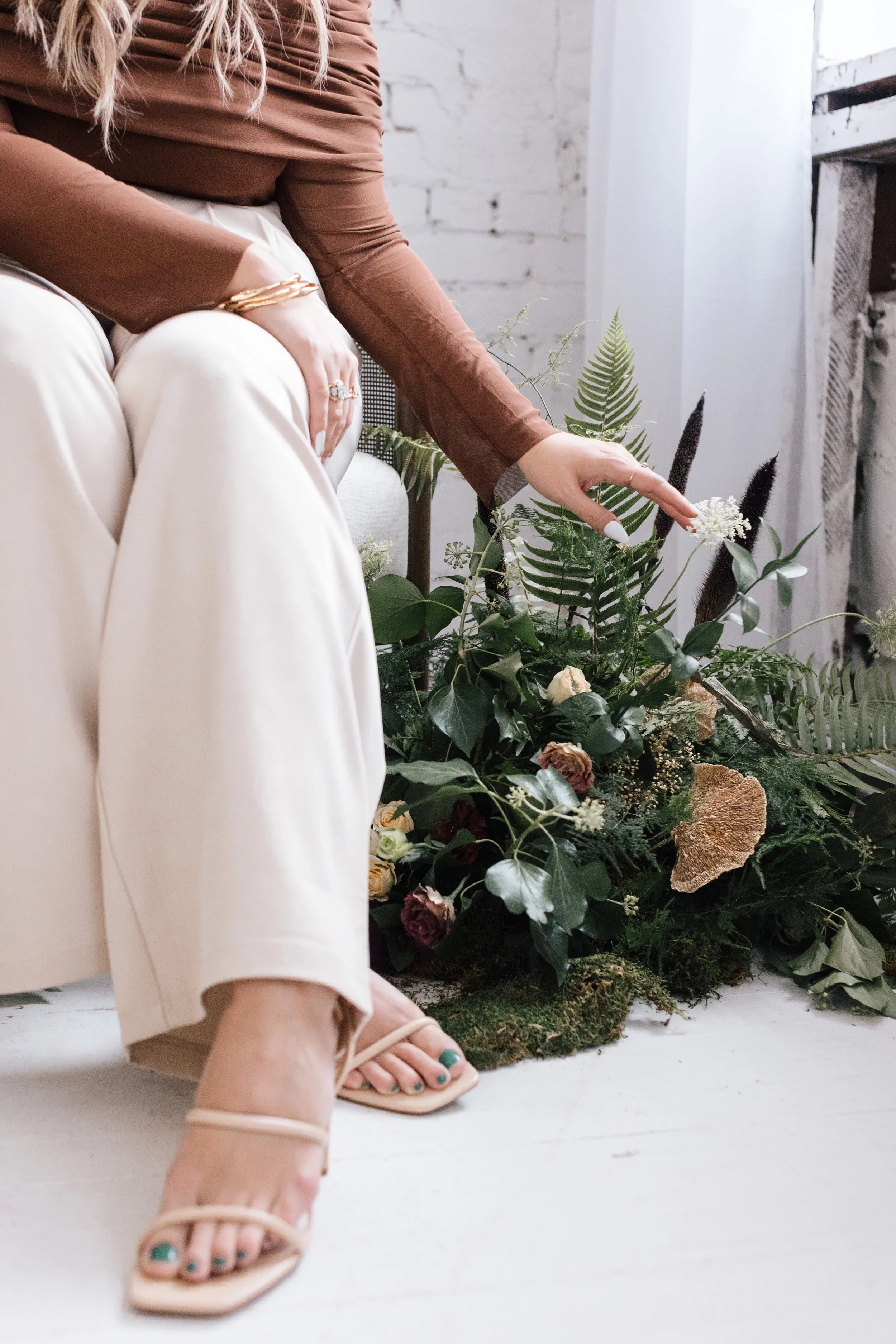
Biophilic floral design for brand photoshoot
Designing for the Human Experience
At its core, floral strategy is about care. It’s about how a space makes someone feel when they arrive, how long they linger, and what stays with them after they leave.
Flowers influence the guest experience in subtle but meaningful ways. They act as spatial cues, helping people orient themselves, slow down, and engage more fully with their surroundings. In hospitality and brand environments especially, florals can counterbalance the transactional nature of service by reintroducing warmth, attentiveness, and human scale.
When florals are placed with intention, they encourage presence. They invite people to notice where they are, rather than rushing through it. Over time, these moments of attention accumulate; shaping memory, emotional comfort, and a sense of being quietly considered.
This kind of work prioritizes human well-being over spectacle. It recognizes that the most lasting impressions are often the least obvious, and that care, when designed thoughtfully, doesn’t need to announce itself.
Floral strategy asks us to look more closely at how spaces care for people, often without saying a word.
Field & Hand exists to support that kind of care, using flowers as a way to ground environments, guide movement, and create moments of quiet attention. It’s a practice shaped by context and intention, one that continues to unfold across different spaces and seasons.
We’ll chat more about our specific approach in the coming weeks, but for now, you can learn more about our philosophy and heart behind this work here.