
The Energy of Flowers
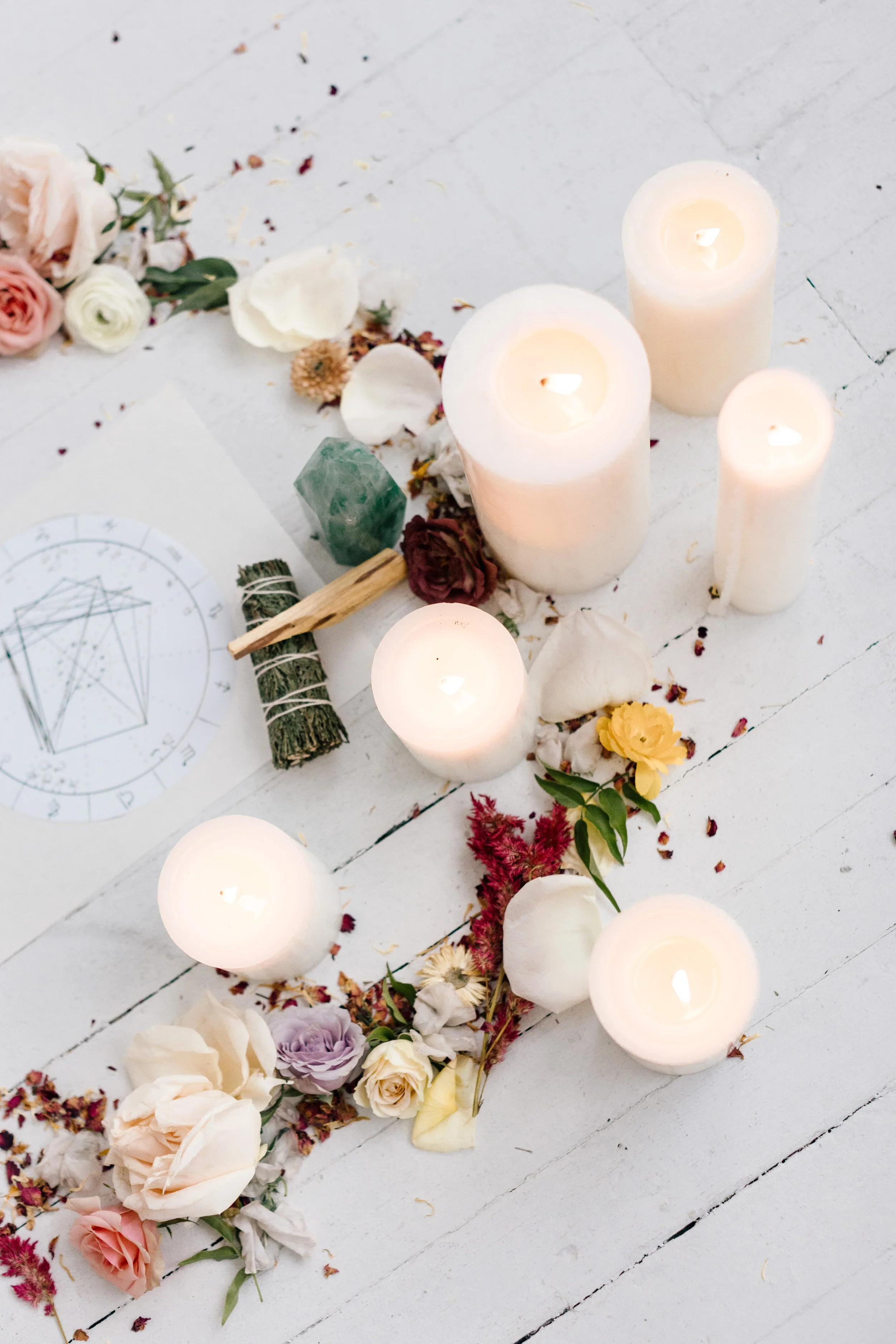
Brand shoot flowers, photo by Linnea Marie Photography
Have you ever walked into a space and felt something shift before you could explain why? Maybe it was a hotel lobby, or a friend's kitchen, or a little corner of a restaurant that just felt different from the rest. Warmer somehow. More alive. The kind of place you wanted to stay in a little longer without quite knowing why.
I'd be willing to bet there were flowers involved.
It's something I've noticed over and over again, and the more I've learned about what flowers actually do to us, the less surprising it becomes. There's real science behind that feeling, and there's something older than science too. That's what I want to explore here, because I have a feeling I’m not the only one picking up on this.
More than a pretty face
The idea that flowers carry energy isn't a new one. Humans have been weaving meaning and symbolism around them for thousands of years, across every culture on earth. The ancient Egyptians used flowers in ritual and burial, to guide their loved ones into the afterlife. The Romans utilized specific flowers believed to bridge the gap between human and divine in their worship, feasts, and celebrations. The Victorians (my personal favorite) developed an entire language of flowers, built on the concept of communicating wordlessly to avoid expressing feelings verbally in their reserved society.
I really don’t believe any of this was arbitrary. It came from a deep and intuitive understanding that flowers do something to us, that they carry a quality or a feeling that words alone can't quite capture. And honestly, I think we still feel that today even if we've lost the vocabulary for it.
Modern science has started to catch up to what humans have always sensed. Research into biophilic design, which is the practice of bringing natural elements into built spaces, consistently shows that exposure to flowers and plants lowers cortisol, reduces anxiety, improves focus, and genuinely shifts mood. Not in a vague feel-good way, but in measurable ways that show up in how people think and behave in a space.
But the science only tells part of the story, and I think the other part is just as worth paying attention to.
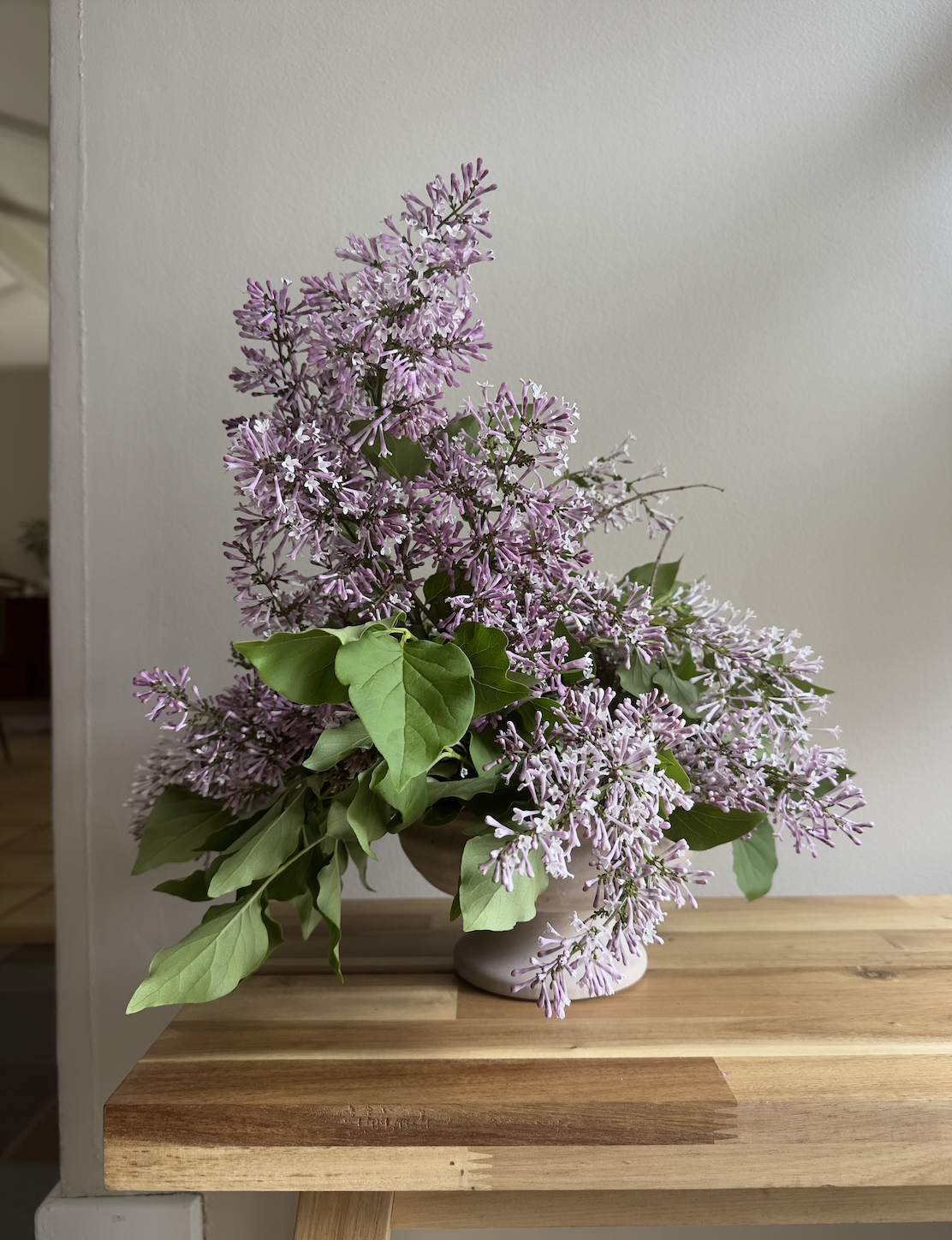
Fragrant Lilac floral arrangement
What your nervous system already knows
Before your brain has even registered what you're looking at, your nervous system has already started responding. This isn't unique to flowers, it's just how we're wired. Scent and color have been influencing human behavior for as long as humans have existed, and we've known this for a while. Retailers pipe specific scents into stores to make you linger longer. Restaurants choose their color palettes deliberately to affect how hungry or relaxed you feel. And most of us have experienced it on a deeply personal level too — the smell of a particular soap or a dish cooking on the stove that takes you straight back to your grandmother's kitchen before you've even had a moment to think about it.
Flowers sit at the intersection of all of this, and in a really unique way. They bring scent, color, and aliveness into a space all at once, which makes them one of the most potent and accessible tools we have for shifting how an environment feels.
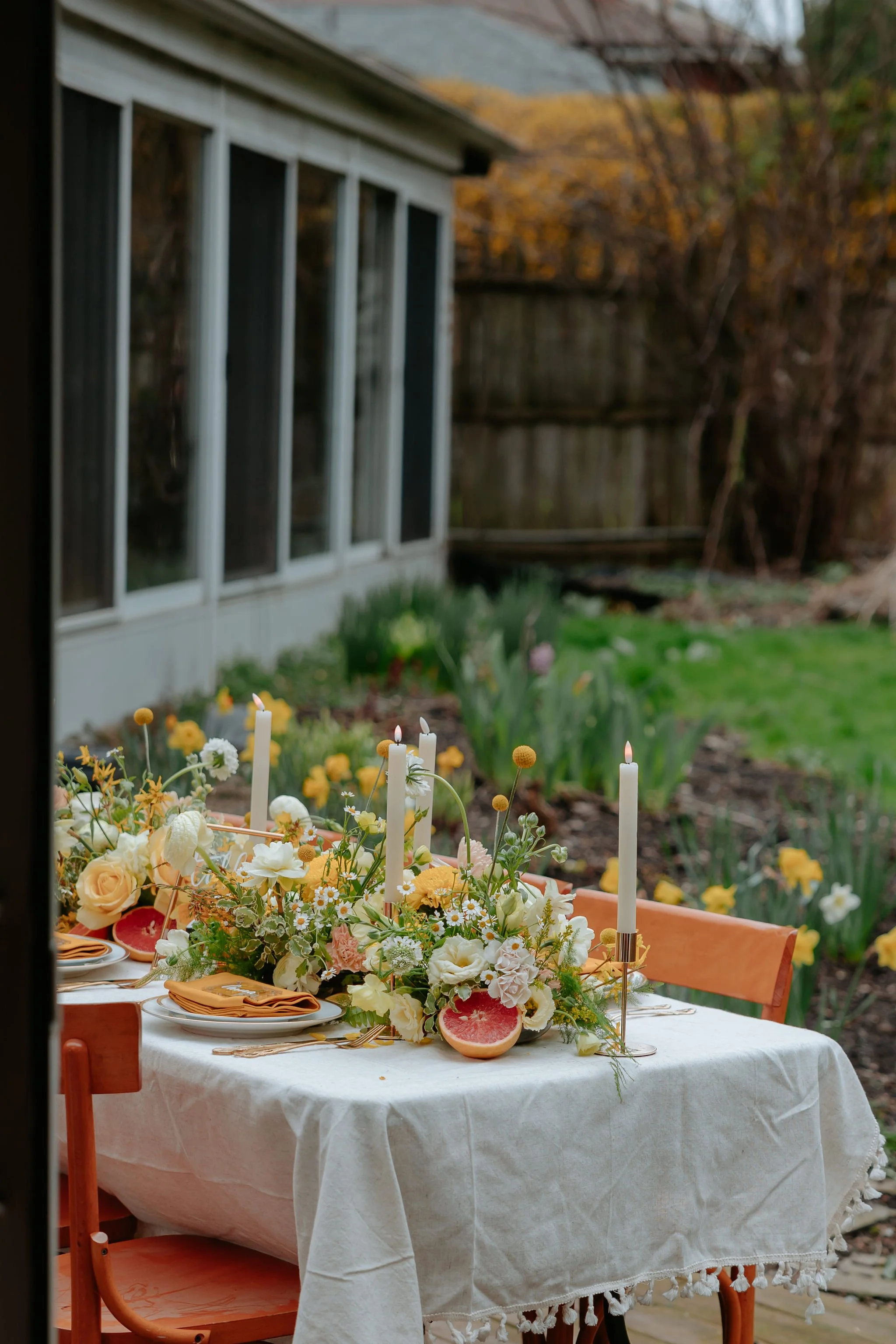
Scent is the fastest pathway. It bypasses conscious thought entirely and goes straight to the limbic system, the part of your brain that regulates emotion and memory. This is why catching a whiff of something blooming can pull you back to a specific moment years in the past.
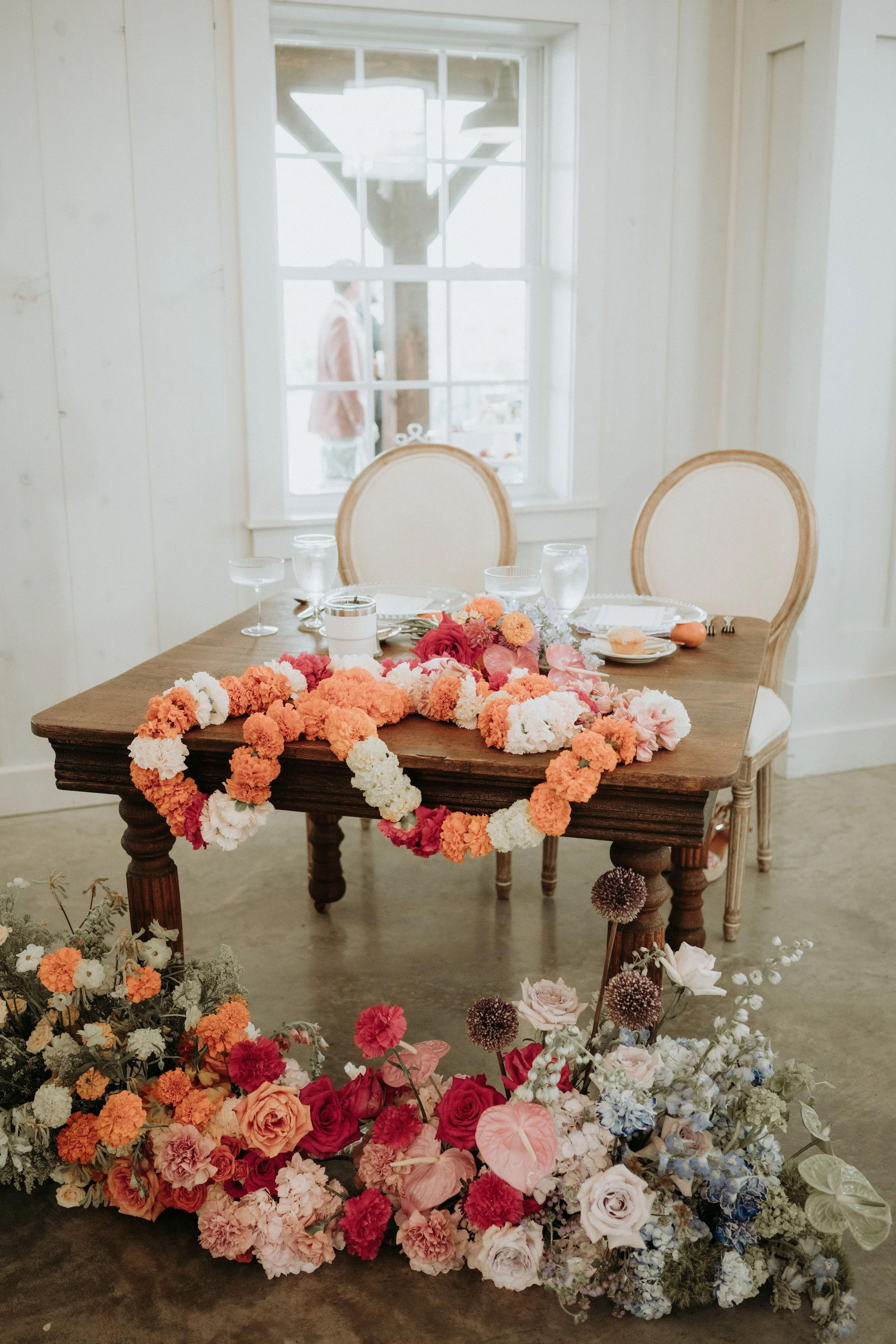
Color works on a different frequency but just as quietly. Warm tones like the deep reds and golden yellows of sunflowers tend to be energizing and uplifting. Cooler tones like the soft purples of lavender or the white of lily of the valley create a feeling of calm and safety. And green, which surrounds us in the natural world, is one of the most grounding colors we can bring into an interior space. Most of us feel this instinctively without having the language to explain it. Just think about how different a room with houseplants feels than one without!
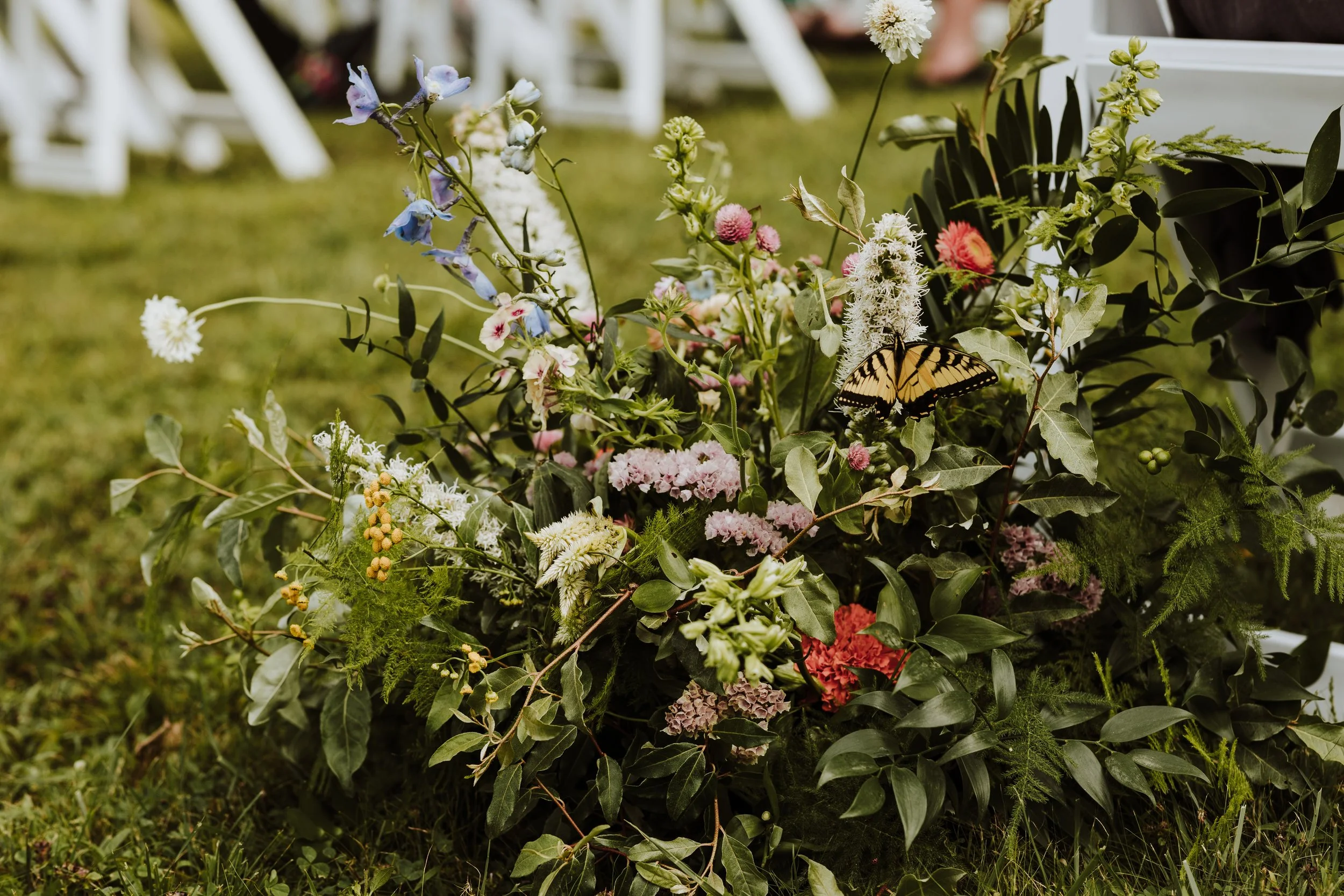
And then there's something harder to quantify, which is simply the aliveness of flowers. Something living in a space changes the energy of it in a way that no candle or print or carefully chosen object can quite replicate. Our nervous systems evolved surrounded by nature, and when we bring flowers inside we're restoring something innate that was always supposed to be there.
Centuries of noticing
Flowers have accumulated centuries of human meaning, and that meaning carries real weight whether we're conscious of it or not. We don't have to know the history to feel it — it's embedded in the cultural memory we all share.
Take roses. Most people associate them with love, but the depth of that goes well beyond Valentine's Day. Red roses carry the energy of passion and vitality. Pink ones lean softer, toward tenderness and gratitude. White toward new beginnings and purity. The color you choose isn't just an aesthetic decision, even if it feels like one in the moment.
Sunflowers carry something almost impossible to resist — a warmth and optimism that feels solar, which makes sense given they literally track the sun. Lavender has been used for centuries in healing and protection, and its calming properties are now some of the most well documented in aromatherapy research. Peonies show up across cultures as symbols of abundance and good fortune. Chamomile has long been associated with patience and ease.
These associations didn't emerge randomly. They developed over centuries of people paying close attention to what certain flowers brought into a moment. That accumulated wisdom is worth taking seriously, even if it's not something we can easily measure. And I think it's worth sitting with that for a second — long before we had the research to back it up, generations of people were paying close enough attention to flowers to know what they brought and what they meant. Human presence and willingness to notice little things is a powerful force, and one I hope we haven't lost.
Flowers at the moments that matter
Think for a moment about when flowers show up in human life. At weddings and funerals, at hospitals and celebrations. On first dates and at memorials, and in places of worship and spaces of healing. We reach for them instinctively at the moments when words aren't quite enough, when we need to communicate something that lives beyond language.
That's not a coincidence. That's centuries of collective human understanding that flowers carry something the rest of our material world simply doesn't.
And it doesn't require a grand occasion to feel it. A single stem on your desk on an ordinary Tuesday; a small bunch of whatever is blooming nearby brought inside. These quieter acts of bringing flowers into everyday life are smaller versions of the same instinct — the deeply human need to stay connected to something living, something that reminds us the world is still full of good things, even when it's hard to feel that way
Human presence and willingness to notice little things is a powerful force
This is just the beginning
What I've shared here is really just an introduction. The energy and meaning of flowers goes so much deeper than a single blog post can hold, and that's what excites me most about this work. There's so much more to explore — individual varieties and what they each carry, the way color affects us on a nervous system level, the ancient traditions that treated flowers as medicine for the soul, and the very practical ways we can start using all of this with more intention in our everyday lives.
That's what I'll keep digging into here on the blog, over on Instagram in the Wednesday Field Guide series, and in my personal notes to my email list. It really excites me, and I hope you can find that joy here too.
Flowers have always been for everyone. And there is so much more to them than meets the eye.